

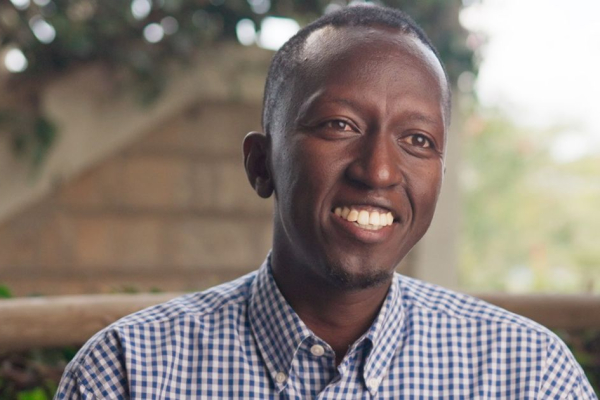
WHEN LIFE GIVES YOU LEMONS, MAKE TEA
Pascal miraculously survived the 1994 Genocide against the Tutsi in Rwanda. He speaks openly about grief, and how his experience has shaped his heart for service to others, especially children in Rwanda.
On April 6, 1994, I turned nine. Our home was full of joy that day — so much food, so much laughter, everything big. I had no idea that morning would be the last one like that. That same day, the president’s plane was shot down. By the next morning, the 1994 Genocide against the Tutsi in Rwanda had begun.
In an instant, my childhood was shattered. I was separated from my family, and almost all of them were killed — my parents and six siblings — everyone except my twin sister, Pascaline. She fled to one neighbor’s house, and I fled to another. Our neighbors took us in and tried to protect us.
From there, our paths went in different directions. We both passed through Congo. I went on through Tanzania, moving through refugee camps. For two years, we didn’t know the other had survived. We were children, alone in a world that had just fallen apart.
My aunt found out that I was in a refugee camp in Tanzania and that my sister was living in Belgium. Through the United Nations Refugee Agency, she worked to bring us back together. My aunt told me that my twin sister was alive, but it felt like a dream. I didn’t really believe it until I saw her.
In 1996, after two long years, we were reunited! I hugged her. We had to tell our stories, and everybody was excited to see two siblings, two twins, who survived miraculously without a single scar. That moment changed everything. Without my aunt, I believe my life would have taken a very different direction. For the first time in a long time, I felt human again.
I was given a seat. I was given food. I was given shelter, school uniforms and school materials. I felt valued and loved again. And it was a big feeling, a great feeling, to know my sister was still alive.
Years later, when I was 30, I married my beautiful wife, Meggy. After losing almost my entire family, starting a family of my own felt like more than just marriage — it felt like life beginning again. As a genocide survivor, starting a family has a double meaning. It is not only a husband and wife coming together; it is a family line rising again from the ashes.
Our first daughter was named Yadah. During my wife’s pregnancy, my heart was full of joy. I was excited. I imagined all the things we would do together as a family. But when she was born, the doctors informed us that she had a deformity in her leg. Because of my faith, I thought, “This is simple. We will pray. God will heal her.”
Later, we were told that Yadah also has cerebral palsy. Today, she cannot walk, talk, or do anything on her own. She needs assistance all the time. I kept believing for a miracle, kept thinking that one day everything would change. But now she is 10 years old.
That reality was very hard to grasp and live with — as a survivor, as someone who serves God, as someone who believes in miracles and in mountains moving by faith. It was, and still is sometimes, a deep challenge. There are moments when I feel like screaming to God, “This is a low blow!”
Sometimes I even think, “Even the people who harmed us, they are not experiencing what I am experiencing. What did I do wrong? Where did I get things wrong?”
I searched for a reason. I asked if I had sinned or missed something. But over time, I began to understand that trials and temptations come to good people, too.
A verse that has really strengthened me is James 1:3: “Count it all joy when you face different trials, because the testing of your faith produces endurance.” I learned that endurance must finish its work in us.
When I read about people of faith in the Bible — God’s generals, the apostles — I see that they, too, passed through deep trials and temptations. I realized that life is a full picture: ups and downs, joy and sorrow.
My children each teach me in their own way. When I look at Yadah, I am reminded that I am not in control of everything. I am helpless in many ways. But when I see my other child, Caleb, going to school, bringing home good grades, playing with other kids, smiling and enjoying life, I say, “Yes, I did it.” That is life — the mixture of both.
“With tea, you still taste the lemon. The loss is still there, the pain is still real, but it warms you from the inside.”
The most important thing is this: when you fall, don’t stay down. Get up and keep going. My experiences as a genocide survivor and as a father to a child with special needs have connected me deeply to the children I now serve. Many are vulnerable — raised by single mothers or with parents who are HIV positive. Some are children of survivors my age, struggling every day to make ends meet.
These children don’t just need money or programs. They need someone who hugs them. Someone who knows their name. Someone who visits them at school. Someone who makes sure they have food.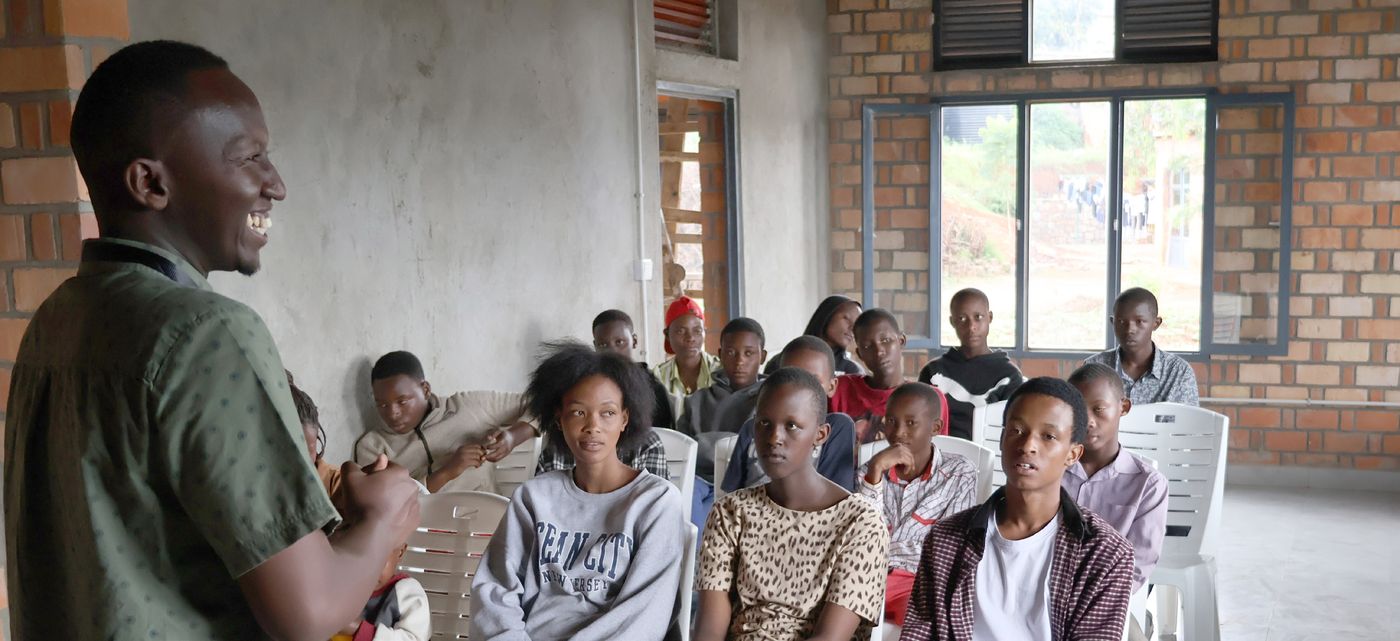
I used to think ministry was about big things — having a large congregation, a mega church. But I discovered another kind of ministry, one that is often unseen. Every time you touch someone’s life, you are ministering.
God loved us and gave us His Son. Jesus loved us and gave us His life. I truly believe that when we pour out that same love to other people — to vulnerable children — we give back that love and pass the baton to the next generation.
People say, “When life gives you lemons, make lemonade.” I changed it: If life gives you lemons, make lemon tea. With lemonade, you cover up the bitterness — you add sugar, you hide the taste. But with tea, you still taste the lemon. The loss is still there, the pain is still real, but it warms you from the inside.
That is how I see my story. The lemon — the loss, the trauma, the unanswered questions — is still there. But God has turned it into something that can warm others, bring comfort and give hope.
I want people to remember this: no matter how many times you fall, hope remains. You can stand up again. You can stand tall. And you can keep walking.
Hear more from Pascal in the new feature video “Woven Together.” Watch at LAHASH.ORG/FAMILY